The real estate industry is evolving faster than ever. Technology, shifting buyer behavior, and the rise of digital platforms are changing how agents connect with potential clients. To stay competitive in 2026, real estate professionals need to adopt smarter, faster, and more personalized marketing strategies.
Buyers and sellers are no longer relying solely on traditional listings or word-of-mouth recommendations. Instead, they research properties online, watch video tours, explore social media listings, and expect instant responses to their inquiries. This means agents must rethink their marketing approach and embrace innovative tools.
Understanding the latest marketing trends helps agents generate more leads, build stronger relationships with clients, and close deals more efficiently. Whether you’re an experienced realtor or just entering the market, knowing where marketing is headed can make a major difference in your success.
Key Takeaways
- AI-powered tools are transforming how agents capture and nurture leads
- Video marketing and virtual tours are becoming essential for property listings
- Social media platforms are driving more real estate discovery
- Hyperlocal SEO helps agents dominate specific neighborhoods
- Marketing automation improves follow-up and client communication
- Personalized marketing builds stronger relationships with buyers and sellers
The Rise of AI in Real Estate Marketing
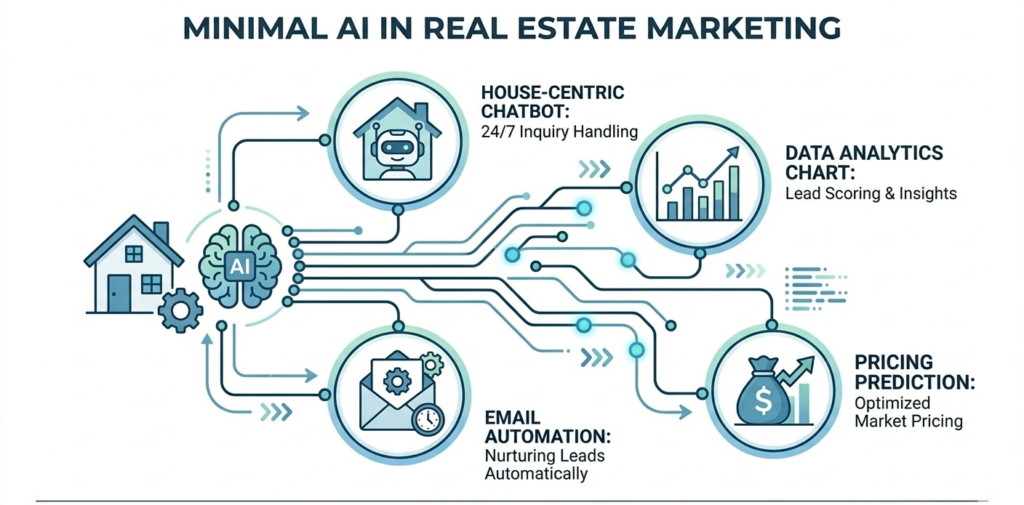
Artificial intelligence is quickly becoming one of the most powerful tools for real estate professionals. AI helps agents automate repetitive tasks, analyze market trends, and deliver personalized experiences to potential buyers.
For example, AI chatbots on real estate websites can respond instantly to inquiries, qualify leads, and schedule property showings. This allows agents to capture opportunities even outside normal working hours.
AI also improves data analysis. Agents can use predictive tools to identify potential sellers, estimate property demand, and determine the best pricing strategies.
Practical ways agents use AI today include the following:
- Chatbots that answer property questions 24/7
- Automated email follow-ups for new leads
- Predictive analytics for buyer behavior
- AI-generated listing descriptions
Agents who adopt AI early will gain a competitive advantage as these tools become standard across the industry.
Video Marketing Becomes the New Property Tour
- Walkthrough tours of homes
- Neighborhood highlights
- Market updates
- Behind-the-scenes content with agents
Stop Losing Leads You Already Paid For
Real Estate Marketing Trends Shaping the Digital Landscape
Understanding Real Estate Marketing Trends helps agents focus on strategies that deliver measurable results. In 2026, digital marketing continues to dominate how properties are discovered.
Buyers often begin their journey online, researching neighborhoods, property prices, and agent reputations before making contact.
Some of the most important digital trends include
- mobile-first property browsing
- voice search optimization
- AI-powered recommendations
- social media property discovery
For instance, many buyers now search for homes using phrases like “homes for sale near me” through voice assistants. Agents who optimize their websites for voice search can capture these high-intent leads.
Additionally, social media algorithms are improving property visibility by recommending listings based on user interests and locatio
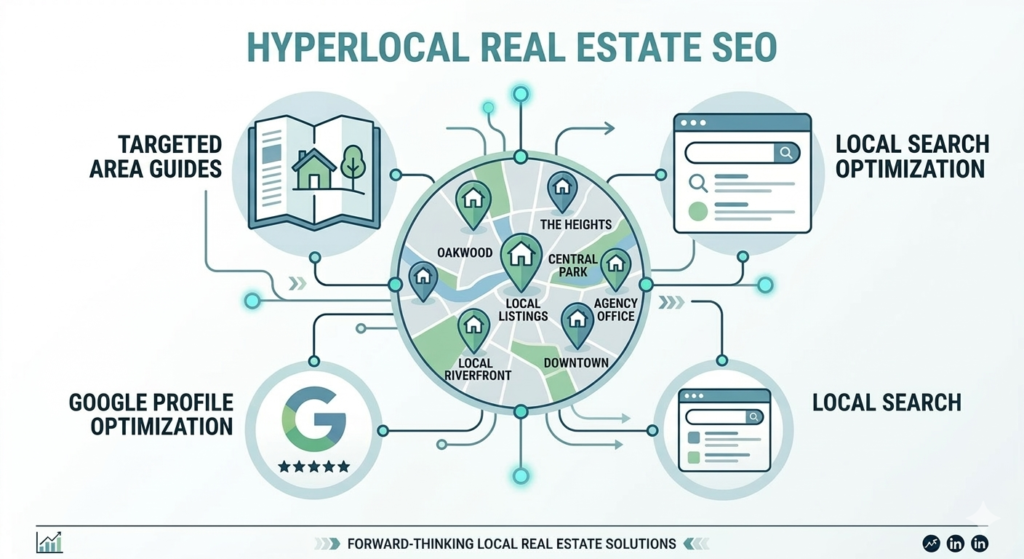
Hyperlocal SEO for Real Estate
Search engine optimization remains one of the most effective ways to generate organic leads. However, modern real estate SEO focuses heavily on hyperlocal content.
Instead of targeting broad keywords like “homes for sale,” successful agents focus on specific neighborhoods or communities.
Examples of hyperlocal SEO strategies include
- Creating neighborhood guides
- Writing blog posts about local schools and amenities
- Optimizing Google Business profiles
- Using location-based keywords
For example, a blog article titled “Best Family Neighborhoods in Austin for 2026” can attract local buyers searching for relocation information.
This approach builds trust while improving search visibility.
Social Media as a Lead Generation Engine
Social media platforms are no longer just branding tools. They have become powerful lead-generation channels for real estate professionals.
Instagram, Facebook, and TikTok are particularly influential because they allow agents to showcase listings through visual content.
Effective social media strategies include
- posting property videos
- sharing client testimonials
- running targeted ad campaigns
- engaging with community content
For instance, an agent might post a carousel featuring five photos of a new listing with a short description and a call-to-action. This simple approach can drive traffic directly to the property page.
Paid social media ads are also highly effective because they allow agents to target specific demographics such as first-time homebuyers or investors.
Marketing Automation for Consistent Follow-Up
One of the biggest challenges in real estate marketing is maintaining consistent communication with leads. Many agents lose potential clients simply because they forget to follow up.
Marketing automation solves this problem.
Automation tools allow agents to set up email sequences, text reminders, and appointment confirmations automatically.
A typical automated lead nurturing system might include
A welcome email sent immediately after a lead signs up
- Follow-up property suggestions within two days
- Market update emails once per week
- Appointment reminders before property showings
- This system keeps agents top-of-mind while saving time.
Automation is one of the fastest-growing Real Estate Marketing Trends because it improves efficiency and ensures that no lead goes unnoticed.
Personalized Marketing Experiences
Modern buyers expect personalized experiences when searching for properties. Generic marketing messages are less effective because consumers are used to customized content from platforms like Netflix and Amazon.
Real estate agents can deliver personalization by using CRM systems and data insights.
Ways to personalize marketing include
- sending property recommendations based on past searches
- creating customized email campaigns
- targeting ads based on buyer preferences
For example, if a client is searching for three-bedroom homes under $500,000, automated systems can send listings that match those exact criteria.
This approach improves engagement and increases the chances of converting leads into clients.
Revive Your Dead Leads in Days Not Months
Old leads aren’t lost — they’re waiting. Our snapshot revives your database, cuts no-shows, and fills your calendar. One system, lifetime access, no fees.
Frequently Asked Questions
What are the biggest Real Estate Marketing Trends in 2026?
The biggest trends include AI-powered marketing tools, video property tours, hyperlocal SEO strategies, marketing automation, and social media lead generation.
Why is video marketing important for real estate?
How can real estate agents generate more leads online?
Is AI replacing real estate agents?
What social media platforms work best for real estate marketing?
Conclusion
Real estate marketing is evolving rapidly, and staying ahead requires agents to adapt to new technologies and strategies. The real estate marketing trends shaping 2026 emphasize digital innovation, automation, and personalized experiences.
Agents who embrace AI tools, invest in video content, optimize for local search, and leverage social media will gain a significant advantage in attracting clients. At the same time, maintaining strong relationships and delivering exceptional service remains the foundation of long-term success.
By combining technology with a human approach, real estate professionals can build stronger brands, generate consistent leads, and thrive in the competitive market of 2026.
Ready to Close More Deals?
Don’t lose another lead automate calls, texts, and follow-ups today.